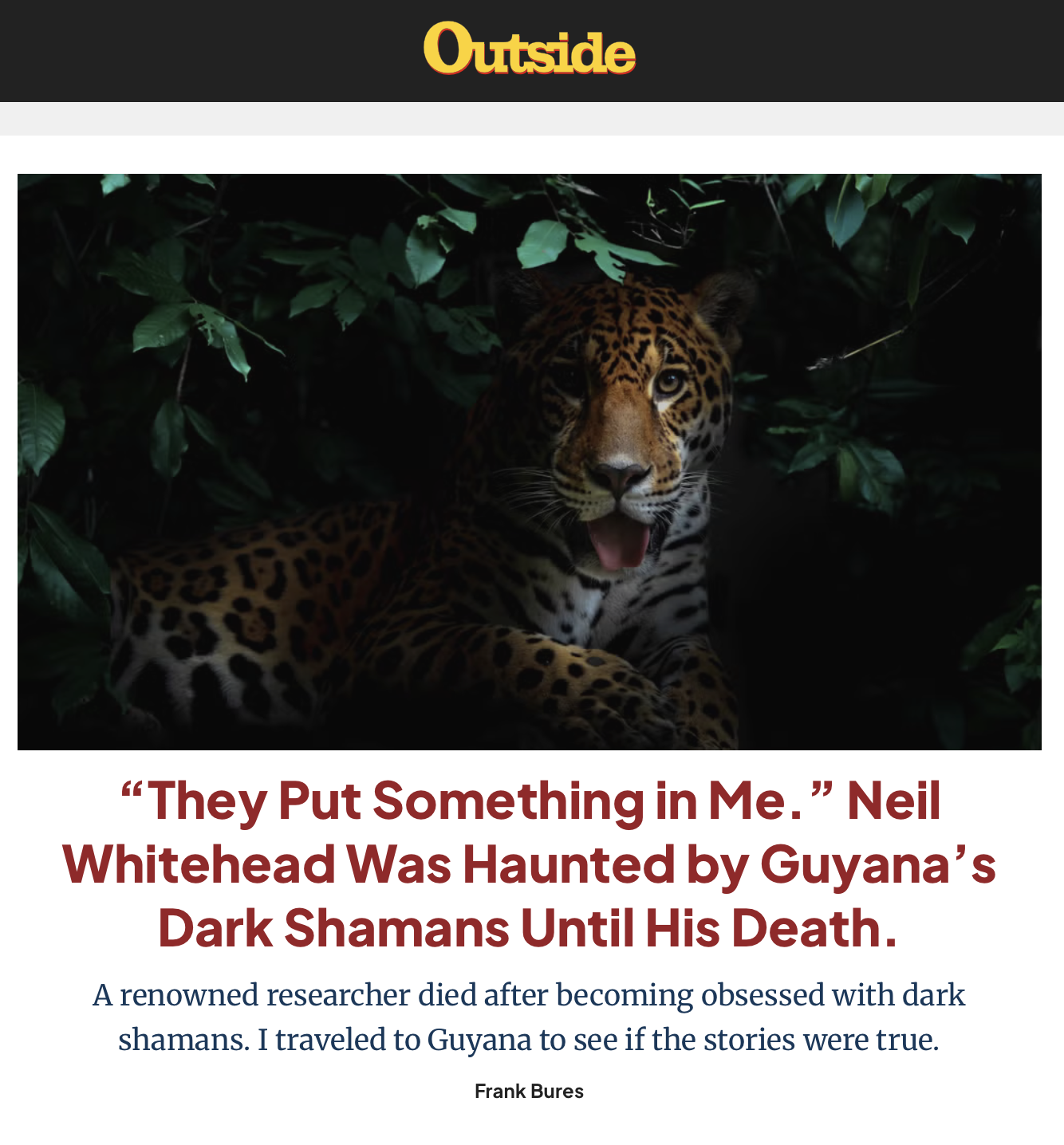
This is a story that I’ve been working on for many years. In some ways, I’ve been working on it since I first went to Guyana in 2011. It’s the story of Neil Whitehead, an anthropologist who was investigating the dark shamans known as “kanaiama.” They are a deeply feared figure in certain parts of Guyana’s interior.
If you have an Outside membership, you can read the whole thing here: “They Put Something in Me.” Neil Whitehead Was Haunted by Guyana’s Dark Shamans Until His Death: A renowned researcher died after becoming obsessed with dark shamans. I traveled to Guyana to see if the stories were true.
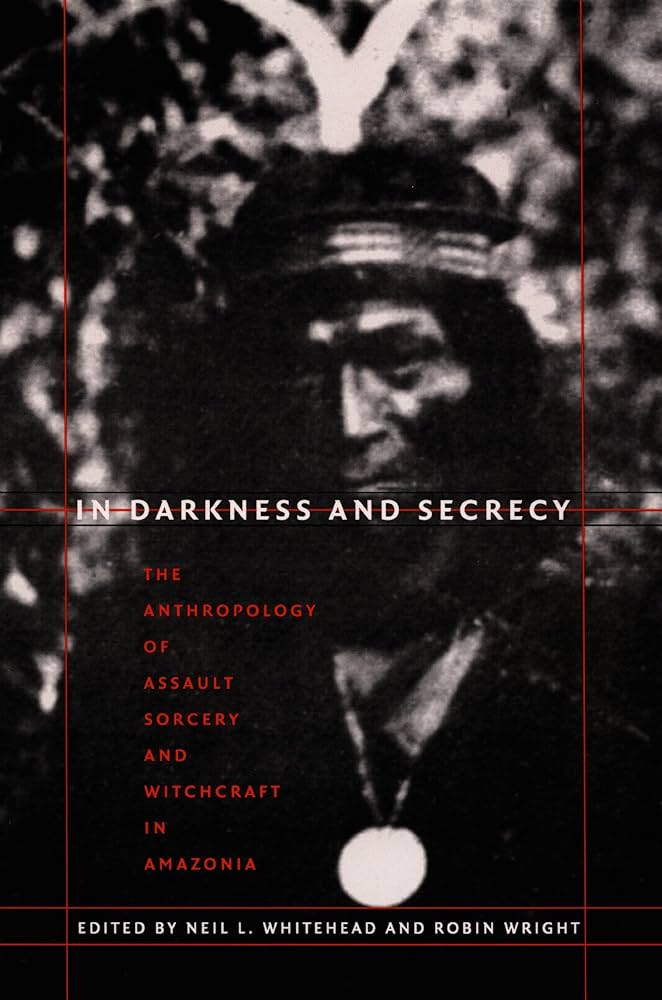
The story is behind a paywall, but here’s the intro:
In 1992, an anthropologist named Neil Whitehead arrived in the capital of Guyana, a small, heavily-forested country on the northern edge of South America. From there, he took another small plane from Georgetown to a village in the forest-covered Pakaraima mountains. At the time, Whitehead was researching the archeology of a remote part of the country, near the borders of Venezuela and Brazil. He was working with the Walter Roth Museum of Anthropology to document the presence of urn burial sites.
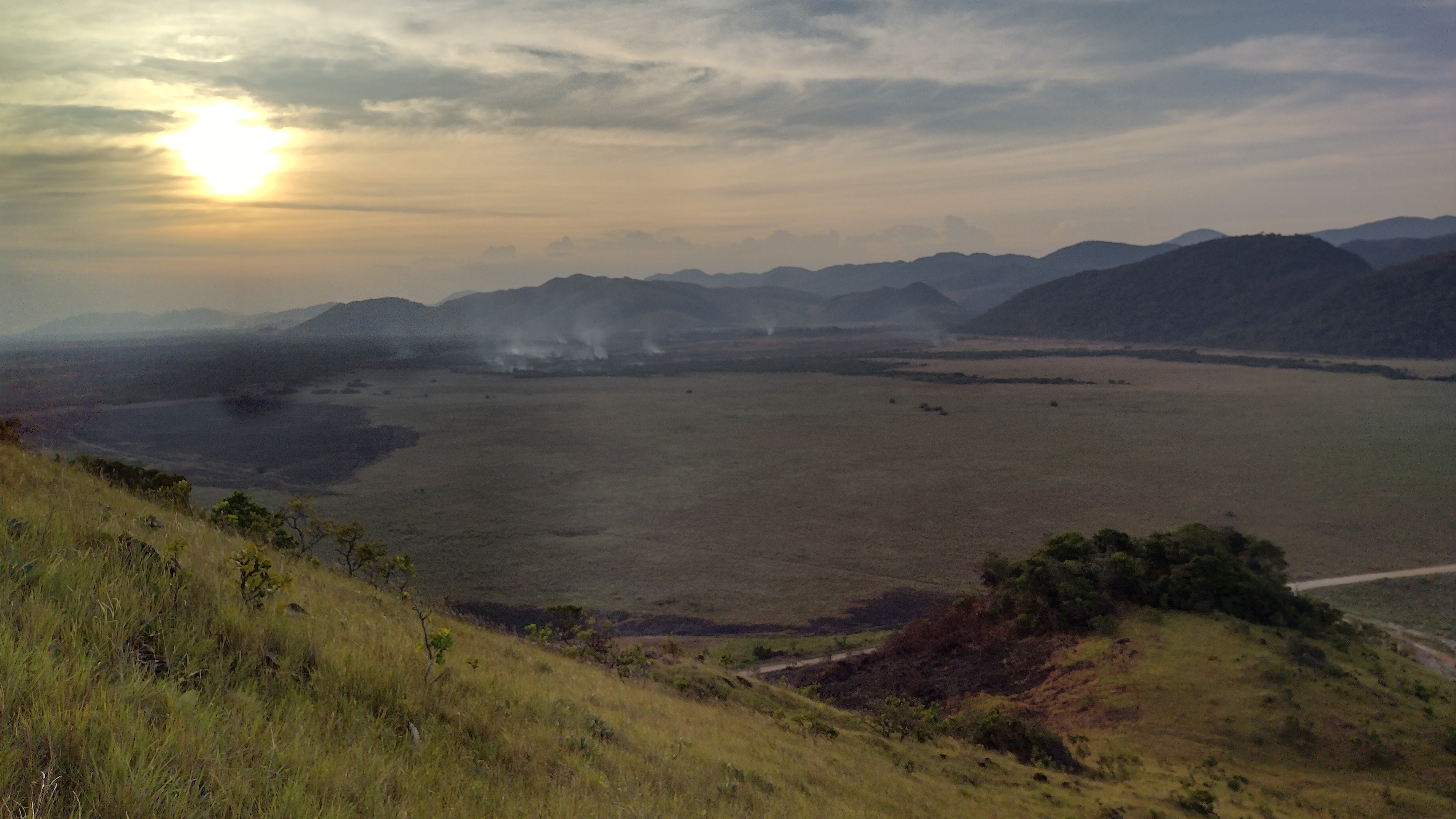
Whitehead suspected the pectoral had been produced by a large civilization, on the so-called Guiana Shield, a geological region in South America that spans Guyana and the surrounding countries. He believed that urn burial sites indicated signs of a more complex, settled civilization. So he set out to search the area where the lost city might have been. But soon after he arrived in the village of Paramakatoi, he was interviewing a nurse, who told him what he should really be investigating: kanaima.
The British academic had studied at the University of Oxford, and colleagues say he was a brilliant historical researcher. Decades of work convinced Whitehead that there were dense, wealthy societies in the region, as in the myth of the city of gold known as El Dorado. This vision challenged 1980s anthropological beliefs, but in 1990, freelance gold miners brought a gold chest pendant called the “Mazaruni pectoral” into the Walter Roth Museum. It had been dredged from the bottom of a river, and the design didn’t belong to any known metalworking tradition.
Kanaima was the name given to people with strange powers and stranger rituals in northwestern Guyana, eastern Venezuela, and south into Brazil. They were said to transform into jaguars or anteaters. They could travel instantly over vast distances. And they were much-feared because they were known to attack lone victims as they walked through the forest. Considered by some to be “dark shamans,” kanaima emerged from a wider landscape of “assault sorcery” that stretches across Amazonia. But there were also aspects of kanaima–such as the role certain plants play–unique to the region.
There are many ways of becoming ill in Guyana, but the nurse in Paramakatoi told Whitehead these victims had telltale signs of a kanaima attack: swollen tongues and faces, with distinctive bruise marks on their bodies. They suffered from fever, diarrhea, and, on closer inspection, their anus had been opened and the muscles stripped with the tail of an iguana, or an “armadillo,” so they would pass a “blood-stained liquid.”
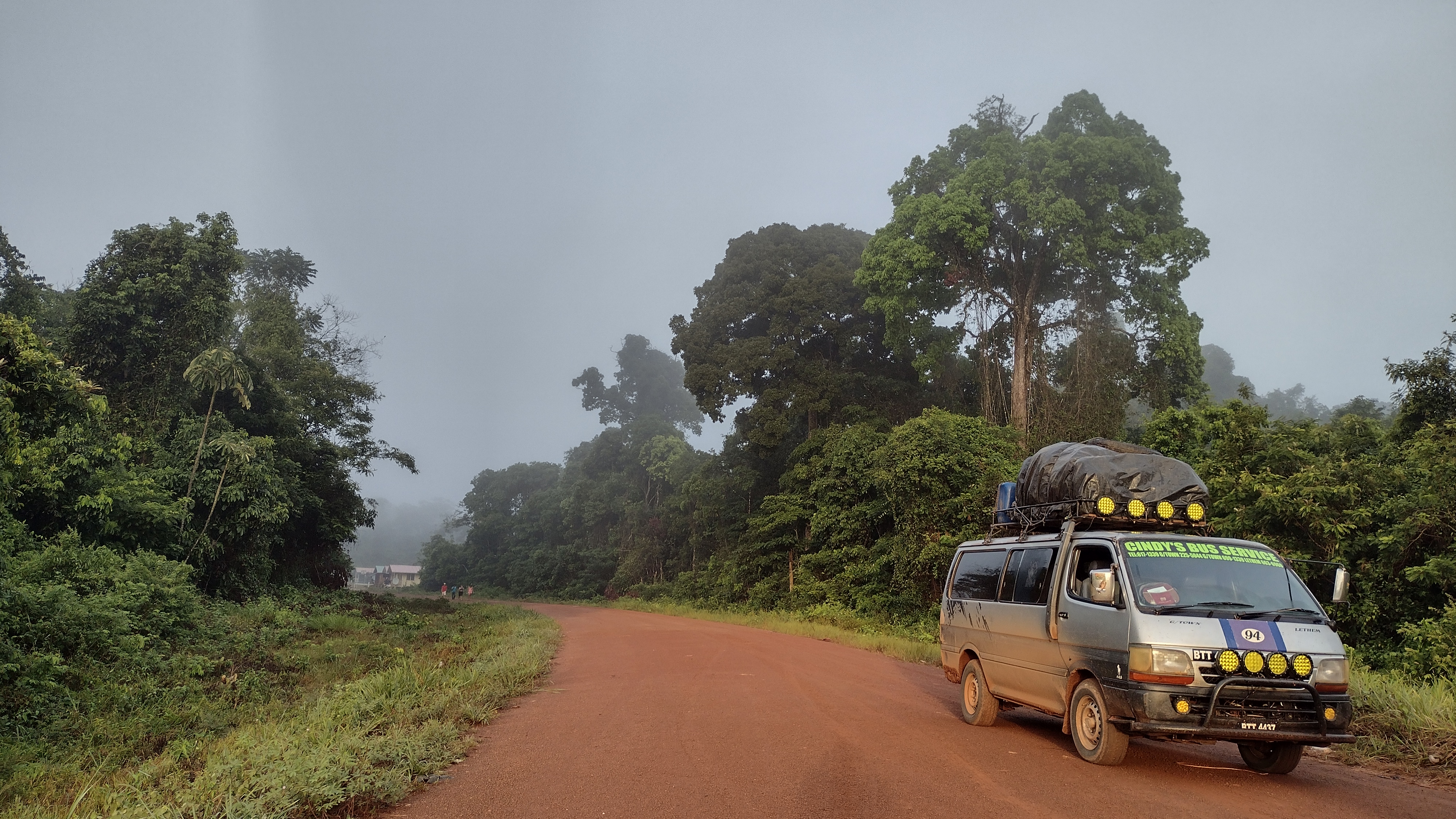
The nurse said she had seen between 20 and 25 such cases during her 30 years. This was intriguing to the anthropologist, who was planning to trek through the mountains for six to eight weeks to a village where he would catch another flight back to the capital. Nonetheless, he set out. Not far out of Paramakatoi, they hiked into a valley, which had a cave with what he suspected might be a burial urn.
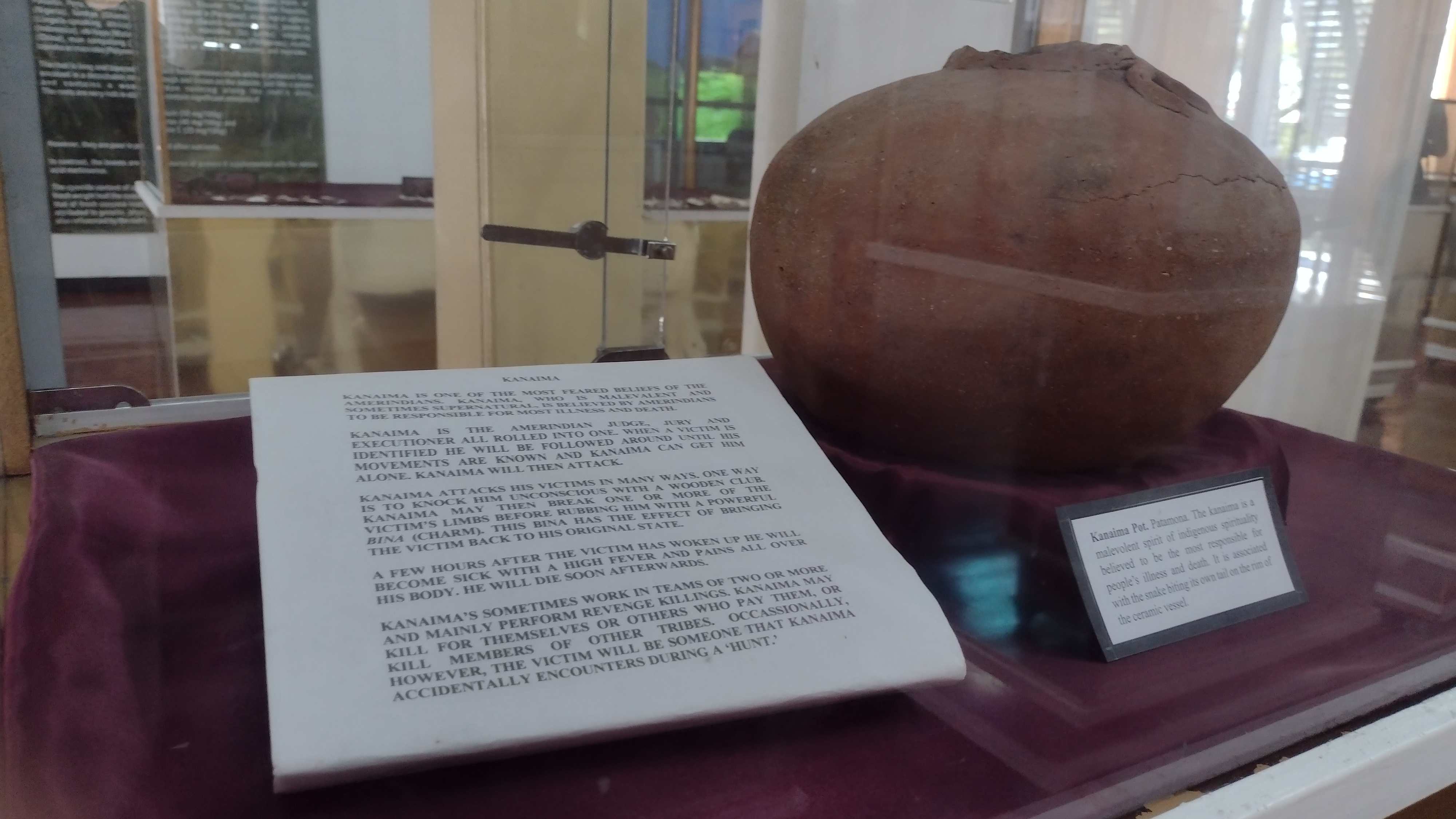
After that, Whitehead started to suspect poisoning of his food, rather than by it. When they entered the cave, Whitehead was disappointed to find the burial vessel was too small to contain a full set of human remains. Near it was a small offering bowl. None of the local Patamunas in the group would touch the vessels. But Whitehead’s Lokono companion, an archaeologist, moved them around so Whitehead could photograph it. The larger pot contained “human skeletal and tissue material,” Whitehead later wrote, of which he took a sample.
After they exited the cave, some of the group insisted they stop by the nearby home of a man to whom those pots belonged, who Whitehead refers to as “Pirai.” When they called on him, he grew “very excited and upset.” Although he didn’t know the language, as they spoke, Whitehead heard the word “kanaima” uttered several times. He later was told that Pirai was “the principal kanaima in Paramakatoi,” and the bones were presumed to be from one of his victims.
After that, the group returned to the village.
 Frank Bures
You must be logged in to post a comment.